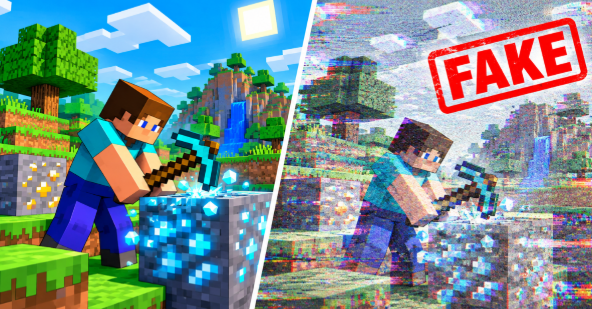
You've probably heard someone argue that Minecraft isn't real, or maybe you downloaded an app that looked nothing like the game your friends play. That kind of mix up is more common than you'd think, and it leaves a lot of players second guessing themselves. Here's the good news: this guide clears up exactly what's real, what's fake, and how to tell the difference in seconds.
Quick answer: Yes. Minecraft is a genuine, officially released video game built by Mojang Studios and owned by Microsoft. It isn't a hoax, a rumor, or an AI generated fake. Most of the confusion comes from unofficial Minecraft clone apps that borrow its name and look, and those are the versions you actually need to watch out for.
What is Minecraft?
Minecraft is a sandbox video game first released by Mojang in 2011, built around mining resources, crafting tools, and building anything you can imagine. It's owned today by Microsoft, sold through official app stores and platforms, and updated regularly with new content. That combination of a real developer, a real company, and real ongoing support is exactly what makes it a genuine, verified game rather than an urban legend.
Minecraft's Gameplay Features Explained
Essentially, Minecraft places you in an environment that is procedurally created using blocks. Players gather resources by punching trees for wood, mining stones and ores, then constructing everything ranging from basic tools to sophisticated machines through redstone. In Survival mode, players must deal with hunger and health, while in Creative mode they have all the resources and can even fly. Multiplayer environments allow players to construct cities along with others across the globe.
What Makes a Game "Real"?
A real game is one built by an actual studio, sold through legitimate storefronts, and backed by ongoing updates and customer support. Minecraft checks every one of those boxes. You can verify it instantly by checking the publisher name on any app store listing, which should say Mojang or Microsoft and nothing else. Anything claiming to be Minecraft without that exact publisher credit isn't the official game.
Sandbox Games and Minecraft
Open world games provide an open world for players to play around in while giving them freedom to do whatever they please within that world instead of forcing them to go through a predefined storyline. The different terrains available in the game, such as the deserts, forests, and oceans, come from our own planet's biomes. While all the physics of the game are distorted in order to make it more fun, they also add up to why people are questioning the authenticity of the game.
Real vs Fake Features
Minecraft is real, but not everything inside it behaves the way things do in real life. Knowing which features are pure game design helps you separate genuine curiosity from actual fake Minecraft concerns. Here's the thing: almost every "unrealistic" detail players notice is intentional, not a glitch or a sign that something's off about the game itself.
Proof of Unrealistic Features in Minecraft
Blocks in Minecraft can float in mid air with zero support, something that would collapse instantly in the real world. For PC players using demanding graphics settings, our VRAM Calculator can help estimate the video memory needed for smooth gameplay.. You can carry dozens of full sized items, including entire trees, inside a pocket sized inventory. Sunlight and darkness switch almost instantly at dawn and dusk, compressing a full day into about twenty real world minutes. None of this is a bug; it's simply how the game was designed to work.
Examples of Unrealistic Game Mechanics
Crafting a diamond pickaxe takes seconds once you have the materials, not the weeks a real blacksmith would need. Eating in Minecraft refills a hunger bar instantly, so food in real life clearly doesn't work the same way it does in the game, where a single golden apple can heal wounds in a flash. Breeding animals just requires feeding them wheat or seeds, with no waiting periods or real biology involved. These shortcuts exist purely to keep the gameplay fast and satisfying.
Why Realism Isn't Minecraft's Priority
Mojang built Minecraft around creativity and accessibility, not scientific accuracy. If mining took real world time or crafting needed real chemistry, the game would lose the fun, sandbox feeling that made it popular in the first place. That's really the answer to anyone wondering about the many ways Minecraft is not real life: the developers chose fun over realism on purpose, every single time. It's a deliberate design choice, not evidence that the game itself is fake.
How to Identify Fake Minecraft Games
Once you understand that Minecraft itself is genuine, the next step is learning to spot the clone apps pretending to be it. These fakes lean on confusing branding, and a few simple checks can expose them in seconds. Spotting them gets easier the moment you know what to look for, so let's break it down.
Individual Fake Game Reviews (Master Craft, Craftzel, etc.)
Master Craft is one of the better known Minecraft clones, offering a stripped down creative mode with no survival elements, no real multiplayer, and textures that reviewers routinely describe as cheap looking. Titles like Craftzel fall into the same broad category: apps that lean on the "Craft" naming pattern to rank in app store searches without any actual connection to Mojang. New clones under similar names appear and disappear constantly, since stores remove them once they're reported, only for near identical copies to resurface under a slightly different name.
Specific Fake Features in Clone Games
Security researchers, including a well documented case involving McAfee, have found clone apps that quietly load hidden ads in the background even when you're not playing, draining battery and data without warning. Many also request permissions they have no real reason to need, like access to your contacts or location. On top of that, clones frequently lack real multiplayer, use glitchy physics, and crash far more often than the official release. If an app checks any of these boxes, treat it as fake.
List of Fake Minecraft Apps/Clones
Clone apps rarely use the word "Minecraft" directly, since that would get them removed for trademark violations almost immediately. Instead, they lean on lookalike names built from a small set of recycled words:
- Master Craft style titles (creative only, no survival mode)
- Crafty Craft style add on and mod makers (not a full game, but often confused with the real thing)
- Block Box or Master Diamond style titles (flagged by security researchers for hidden ad loading)
- Craftsman: Building Craft and similar "Craftsman" branded clones
- RealmCraft and other "Realm" branded lookalikes
- Generic titles combining Cube, Block, Build, or 3D with "Craft" or "Mine"
Names shift constantly, so treat this list as a pattern to watch for rather than a fixed roster. If an app's title stacks two or three of these keywords together, slow down and check the publisher before you tap install.
Why People Get Confused About Minecraft's Authenticity
App stores rank search results partly on keyword matching, and clone developers know it. By stuffing titles and descriptions with words like "mine," "craft," "build," and "3D," these copies climb toward the top of search results for anyone typing "Minecraft" into an app store, especially younger players who tap the first icon that looks familiar. Old internet hoaxes add to the confusion too. Mojang has released several April Fools' joke updates over the years, most famously Minecraft 2.0 back in 2013, a fake announcement that briefly convinced players an entirely new game was coming. Add in years old creepypasta myths about supposedly haunted versions of the game, and it's easy to see why so many players end up typing "is Minecraft real" into a search bar.
Real-Life Minecraft Experiences
Minecraft's influence has moved well beyond the screen, and that's actually one of the clearest signs of how real and established the game is.
Physical/Real-Life Minecraft Setups
LEGO sells an official Minecraft brick set line, letting fans build blocky worlds with real, physical pieces. Merlin Entertainments, the company behind Legoland, has partnered with Mojang on a project called "Adventures Made Real," bringing Minecraft themed rides, hotel rooms, and a dedicated theme park land called Minecraft World to Chessington in the UK. Mojang also runs official touring Minecraft Experiences in cities around the world, letting fans step into immersive, in person versions of the game's world. None of this would exist if Minecraft were some kind of fake or fictional rumor.
Mobile App Warnings: Avoid Fake Versions
Mobile is where most Minecraft clones live, since Android and iOS app stores make it easy for anyone to publish a lookalike game with minimal review. If you're downloading on a phone or tablet, that's exactly when you need to slow down and double check what you're installing. A few extra seconds spent checking the publisher name saves you from ads, glitches, and wasted storage space.
Official Download Sources by Platform
| Platform | Official Source |
|---|---|
| PC / Mac | minecraft.net or the Microsoft Store |
| Xbox | Xbox Store (built into your console) |
| PlayStation | PlayStation Store |
| Nintendo Switch | Nintendo eShop |
| Android | Google Play, publisher listed as Mojang or Microsoft |
| iOS | Apple App Store, publisher listed as Mojang or Microsoft |
Before you install anything, tap through to the publisher's name on the store listing. If it doesn't say Mojang or Microsoft, close the app and keep looking. That one check stops almost every clone app before it ever reaches your device.
FAQs
Is Minecraft a real game or fake?
Minecraft is a real, officially released video game made by Mojang Studios and owned by Microsoft. It has sold hundreds of millions of copies since 2011, which isn't something a fake game could pull off.
What is the difference between real and fake Minecraft?
The real Minecraft is published by Mojang or Microsoft and sold through official app stores and platforms. Fake versions are unofficial clone apps that copy the look and name without any connection to the actual developer.
How can I tell if a Minecraft app is fake?
Check the publisher name on the app store listing; it should read Mojang or Microsoft. If the name is unfamiliar, reviews mention excessive ads, or the icon looks slightly off, you're probably looking at a clone.
Where can I download official Minecraft?
Use minecraft.net, the Microsoft Store, or your console's official store, such as the Xbox Store, PlayStation Store, or Nintendo eShop. On mobile, download only through Google Play or the Apple App Store with Mojang or Microsoft listed as the publisher.
Are there real-life versions of Minecraft?
Yes. LEGO makes official Minecraft brick sets, and Merlin Entertainments is building Minecraft themed rides and a dedicated theme park land through its "Adventures Made Real" partnership with Mojang.
Why are there so many fake Minecraft games?
Minecraft's simple, blocky art style is easy and cheap to copy, and its massive popularity means clone developers can earn real ad revenue from confused searchers. App store keyword stuffing makes those clones even easier to find.
Is Minecraft safe to play?
The official version is safe and includes parental controls, chat filters, and content moderation tools. Unofficial clone apps are the real risk, since some load hidden ads or request unnecessary device permissions.
What platforms is Minecraft available on?
Minecraft runs on PC and Mac, Xbox, PlayStation, Nintendo Switch, and mobile devices through Android and iOS. If you're playing on PC, you can also use our FPS Calculator to estimate your expected frame rate. Most versions support cross platform play through Bedrock Edition.
Can fake Minecraft games harm my device?
Some clone apps have been found loading hidden ads in the background, draining battery and data even when you're not playing. Others request permissions like contacts or location access that a simple building game has no real reason to need.
How do I report a fake Minecraft app?
Use the "report" or "flag as inappropriate" option directly on the app's Google Play or Apple App Store listing. You can also report suspected trademark violations through Mojang or Microsoft's official channels.
Is Minecraft based on a true story?
No. Minecraft is entirely fictional, created by Swedish developer Markus "Notch" Persson and released in 2009 as an original sandbox concept, not an adaptation of any real event.
Was Minecraft made with AI?
No. The original game was hand coded in Java by Notch back in 2009, long before modern AI tools existed in their current form. Later features and mods sometimes use AI, but the core game was built by human developers.
Is Minecraft land real?
The terrain inside the game is procedurally generated, meaning it's virtual, not physically real. That said, a genuinely real, physical "Minecraft World" theme park land is set to open at Chessington in the UK, so the line between game and reality is starting to blur.
Conclusion
So, is Minecraft real? Of course, definitely! It is an authentic video game created and owned by Mojang Studios, bought in every store available and maintained since its 2011 launch. There are no hoaxes, no rumors, and no AI-generated trickery involved here at all. But where the problems usually arise is in connection with various apps cloned off of Minecraft, not in the game itself. Just be sure to check the publisher before downloading, use only official sites to acquire your copy of the game, and pay attention to the naming patterns discussed earlier – and you won’t have any trouble avoiding the imposters. Nowadays, Minecraft's influence goes way past your computer screen, with official LEGO editions and fully themed amusement parks opening within the next few years. That's something that would not exist in a virtual reality surrounding an invented rumor – it only exists around a real game